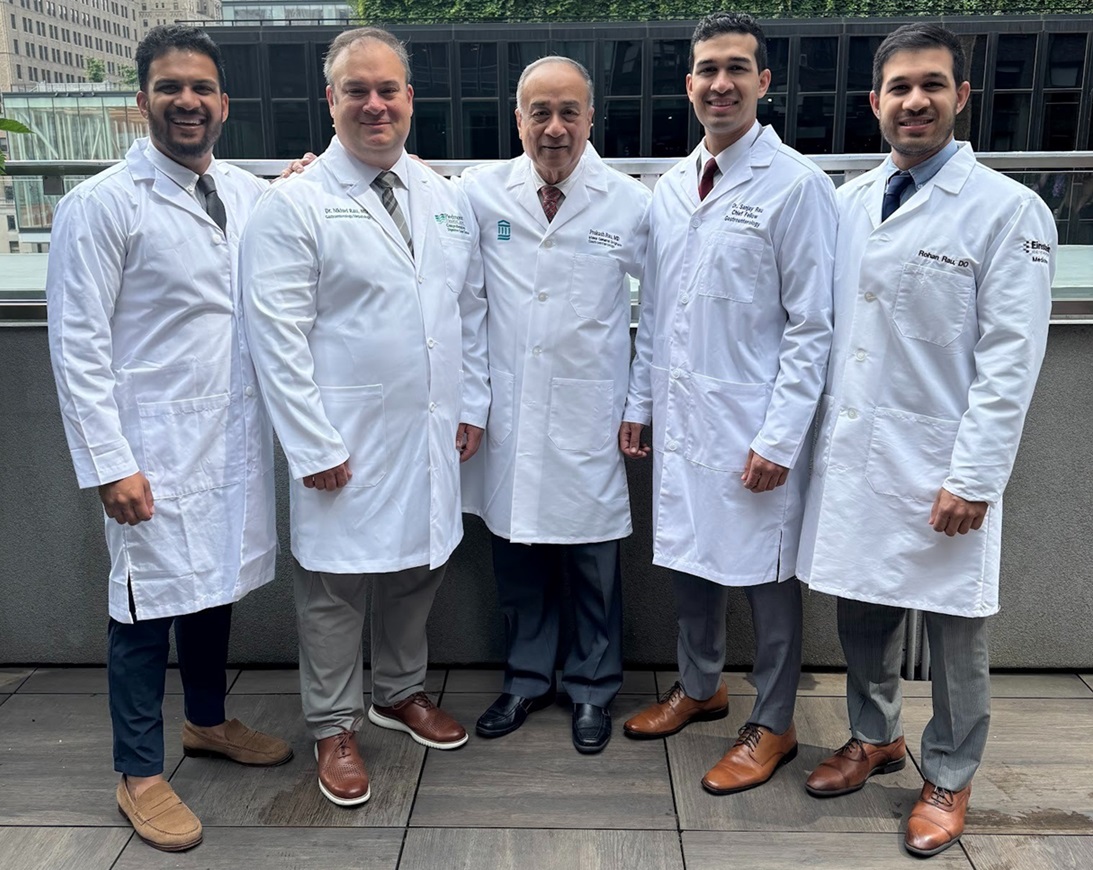
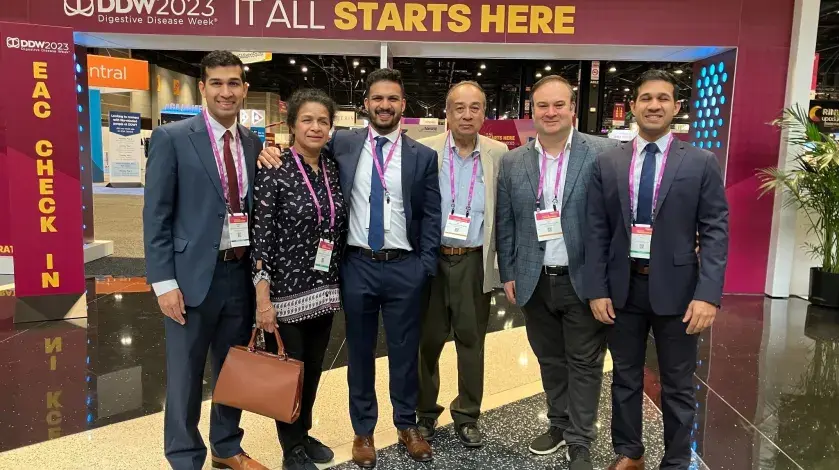
The Doctors Rau! Gastroenterologist Prakash Rau, MD, flanked by his four sons – Prashanth, Nikhiel, Sanjay and Rohan – who all followed their father into the field of gastroenterology.
When asked about his four sons following in his footsteps, Prakash Rau, MD smiles wryly and replies, “I think they were following their older brother.”
“No, it was definitely Dad,” said Rau’s eldest Nikhiel, the Chief of Gastroenterology at North Carolina’s Piedmont Healthcare.
“My dad has always been very happy in his work and has such a positive attitude. It seemed like a great vocation from both a personal and professional standpoint,” Nikhiel said.
“My dad has showed us what it is like to have a calling,” added Rau’s third son, Sanjay, who recently completed his GI fellowship at the University of Massachusetts Medical Center.
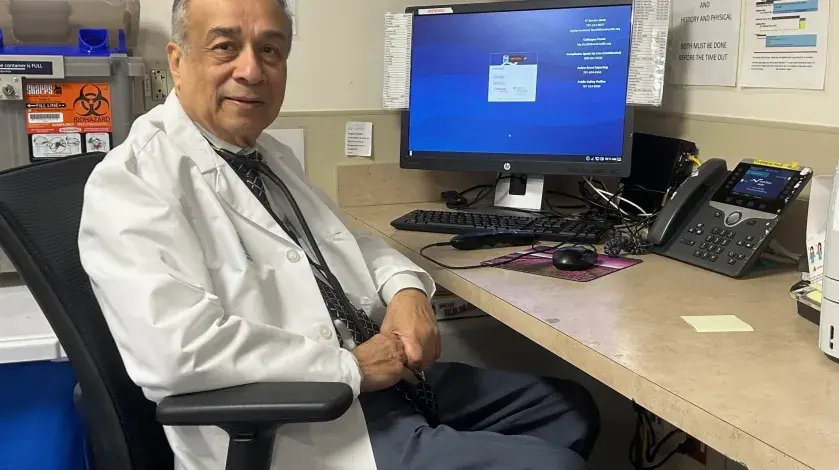
Gastroenterologist Prakash Rau, MD has been caring for patients at South Shore Hospital since 1979.
“For him this isn’t just a job. He cares deeply about the people and the patients at South Shore Hospital.”
While he says, “no one was forced” into a career in medicine or specifically the field of gastroenterology, Rau acknowledges the influence his work and the experiences he and his wife, Poornima provided their sons helped shape and guide them on their career paths.
“We come from a long line of doctors,” said Rau, noting that both his grandfathers and Poornima’s were physicians in their native India.
“We traveled as a family to India every year and the boys volunteered at the eye camps. They have always been around doctors,” Rau said.
Prashanth, the second eldest and Rohan, the youngest, recall attending their father’s Stanley Medical School reunions every few years and getting to know his classmates and their families.
“We all grew up with dad’s friends from med school and their children, and we saw firsthand the great careers they had,” said Prashanth, Associate Professor of Advanced GI at the University of Massachusetts Medical Center.
While Rau led by example, Poornima, a paraeducator at Hingham’s Plymouth River Elementary School, made sure we were keeping up with our studies,” Nikhiel said.
“The driving force of this all, is my mom,” he said. “Her focus on education was an integral factor that kept us all on track.”
Poornima also encouraged the boys to take on service projects and volunteer work.
Volunteering at South Shore Hospital opened the door to summer jobs when they were in high school and college, giving all four Rau brothers personal experience with, and additional exposure to the medical field.
Whether shadowing physicians in the emergency department or hanging out in the doctors’ lounge with their father’s colleagues, Rau’s sons came to know South Shore Hospital as far more than just their father’s work.
“We’re grateful for that experience,” Prashanth said. “South Shore Hospital is a real community.”
It’s a community that for the last 47 years, Rau has helped build.
A pioneer in the field of gastroenterology
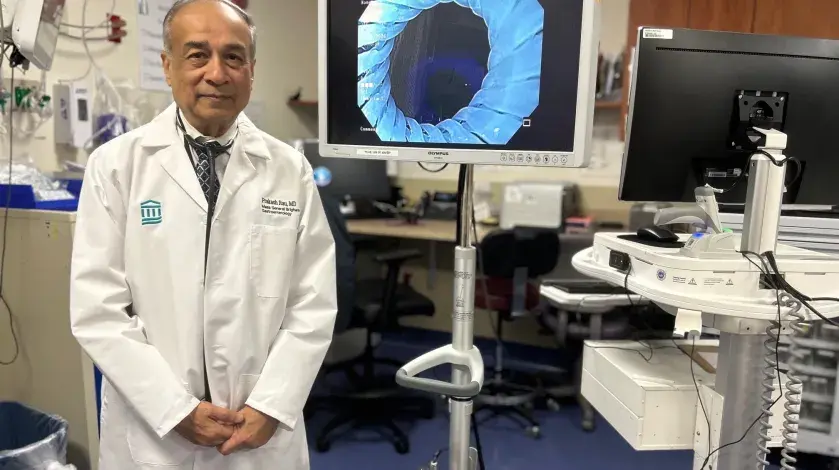
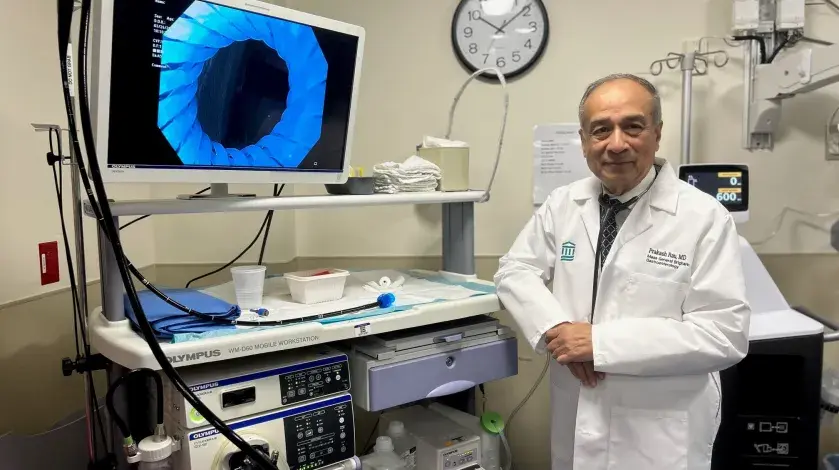
A pioneer in gastroenterology, Prakash Rau, MD opened the first outpatient endoscopy center in New England in 1998.
Born in Madras (now known as Chennai) in South India, Rau’s journey into medicine began at Stanley Medical College.
Like many of his classmates, Rau planned to come to the U.S. to complete his studies and training and then return to India to practice medicine.
The Vietnam War changed that plan.
A shortage of doctors in America during the war provided more opportunity for foreign medical graduates to immigrate and launch careers in the U.S., a situation that forever altered Rau’s path and eventually brought him to South Shore Hospital.
After an internship at Schenectady’s Ellis Hospital, an internal medicine residency at Falkner Hospital and a gastroenterology fellowship at Boston City Hospital (now Boston Medical Center), Rau came to South Shore Hospital in 1979.
“At that time, we did all procedures at the bedside in the hospital,” Rau said.
Diagnostic tools were limited to X-ray and barium enemas. Physicians had to lean on instinct and patients often needed surgery to diagnose and treat GI conditions, he said.
The 1970s brought advances to endoscopy that changed how patients received care and a record-breaking snowstorm that changed where patients received care.
Snowbound and stuck at home for days following The Blizzard of ’78, people across Massachusetts were unable to get to hospitals for essential health services, like dialysis.
The unprecedented weather event would lead to significant changes in the delivery of healthcare and the creation of outpatient care centers, including Rau’s groundbreaking endoscopy practice – the first of its kind in New England.
In the three decades since opening South Shore Endoscopy in Braintree, Rau has helped several other physicians build their own outpatient practices around the state.
Central to every success is Poornima, Rau said.
“She is the glue that holds our family together and has made it all possible.”
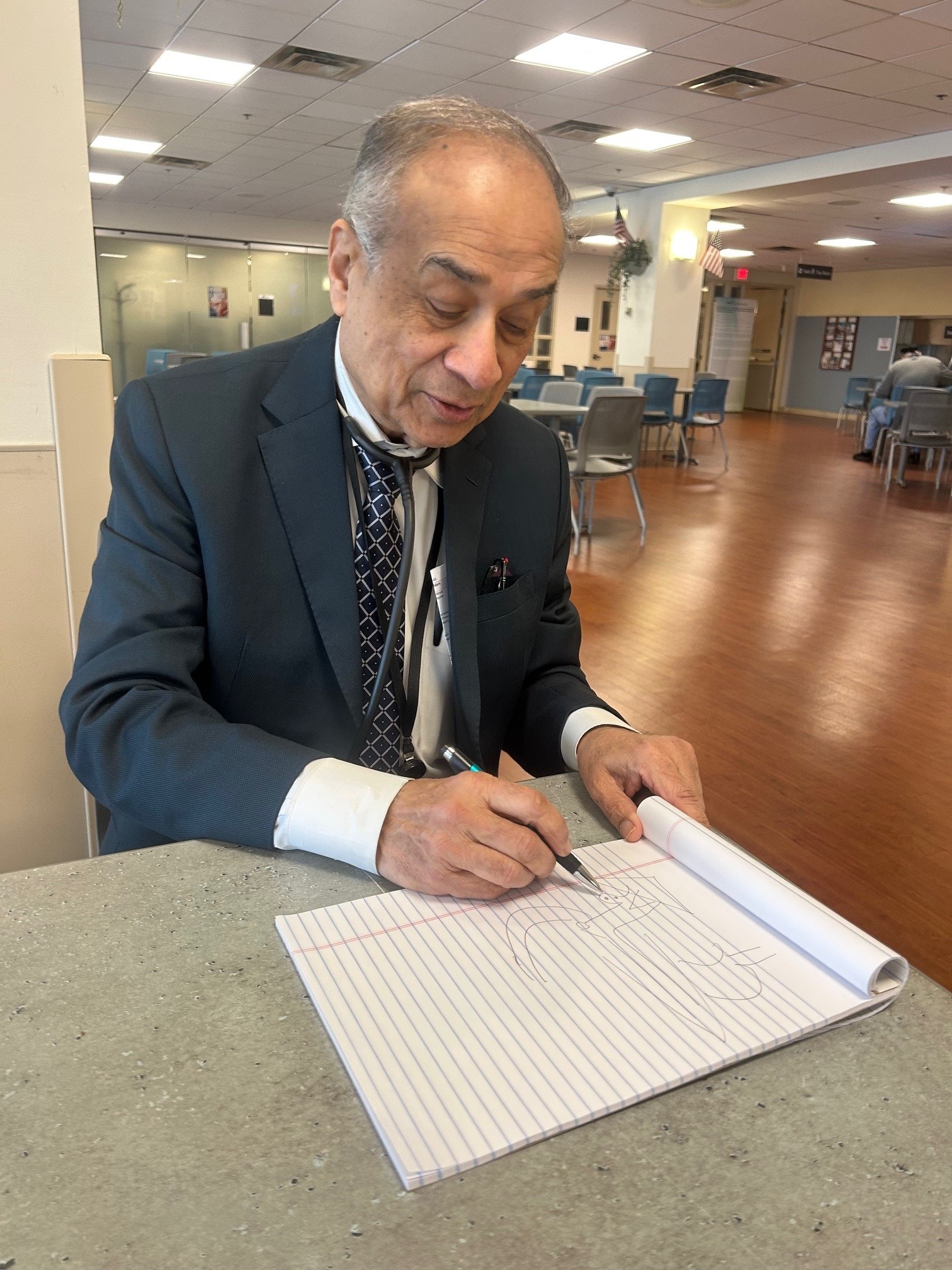
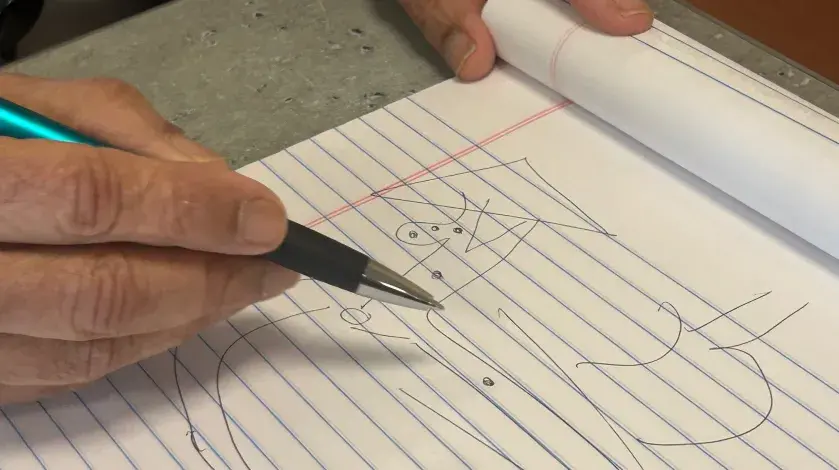
During his 47-year career, Dr. Rau has sketched countless drawings of the GI tract for patients, taking the time to explain their condition and going over treatment plans.
Drawn to gastroenterology
There is a white board in his office at South Shore Endoscopy where Rau has sketched countless renderings of the GI tract for his patients, pinpointing their particular condition and explaining the treatment plan.
This small extra step that her husband takes with patients has a big impact, Poornima said.
“He is taking the time to listen and communicate with patients,” she said.
“By drawing a picture, he is making sure they feel heard and understand what’s going on. That’s how you connect with your patients.”
Rau’s sons see the benefits of their father’s process.
“My dad taught us that most people are visual learners and he has always driven home the importance of communicating with patients,” said Prashanth, who has adapted the method by using Google images rather than a white board.
Explaining the anatomical terms through pictures can be a helpful tool,” said Rohan, a GI Fellow at Rutgers University. “You’re meeting patients where they are and building trust.”
“Most people don’t understand medical jargon, but a picture is worth a thousand words,” said Sanjay.
Drawing pictures is another way Dr. Rau connects and communicates with his patients.
“It only takes a few minutes to draw a picture, but it means a lot to patients when you can show them what the problem is and how endoscopy will work to solve it.”
Whether on a white board or a sheet of notebook paper, Rau’s drawings are illustrative of his overall approach to patient care, which is personal and accessible.
“My dad gets to know his patients, their background and families, and he shares about himself. He creates a two-sided relationship with them,” Sanjay said. “The joy of work for my dad is the people.”
“I’m a people person,” Rau said.
Helping people is what drew Rau to medicine and what keeps him going after nearly five decades.
“In medicine you touch a lot of lives and their families,” he said.
The power of connection
Dr. Rau still sees patients in South Shore Hospital on Thursday and Friday mornings before heading to his endoscopy practice in Braintree.
Forming connections with his patients and colleagues has been central throughout Rau’s career and he has impressed that upon his sons.
“Dad gets to know his patients and their families,” Nikhiel said. “It’s that interpersonal touch that sets him apart. It’s the secret sauce.”
“His relationship with patients transcends today’s standards,” said Sanjay, noting his father freely gives out his cell phone number and is invested in every person he talks to.
“It’s quite difficult in the modern era to make those kind of connections, but my dad does,” Prashanth said.
Making an effort to meet with patients in person and following up with a phone call rather than an email or text, is another lesson Nikhiel said he and his brothers have learned from their father, who keeps the family connected the same way.
Spread out across three states, the Raus reunite at medical conferences where Prashanth says his father knows hundreds of physicians. Sanjay, Poornima, Prashanth, Prakash, Nikhiel and Rohan Rau together at the American Gastroenterological Association's 2023 Digestive Disease Week conference.
“My dad calls each of us every day,” said Prashanth. “He goes right down the line starting with Nik.”
Prashanth said these daily check-ins always include a snippet of information on what his brothers are up to and are a reminder to reach out to one another.
“It’s the catalyst to keep us all connected,” he said.
A living legend, a living legacy
Walk with him through the halls of South Shore Hospital, and you’ll be hard pressed to find anyone who doesn’t know Dr. Rau.
“My dad’s an institution at South Shore Hospital,” said Sanjay. “He knows everyone.”
Rau’s exuberance and outgoing personality likely have more to do with his living legend status than his career longevity, although Sanjay notes it’s remarkable and rare for someone to be at the same hospital for 47 years.
“My dad has formed a real community there,” Sanjay said.
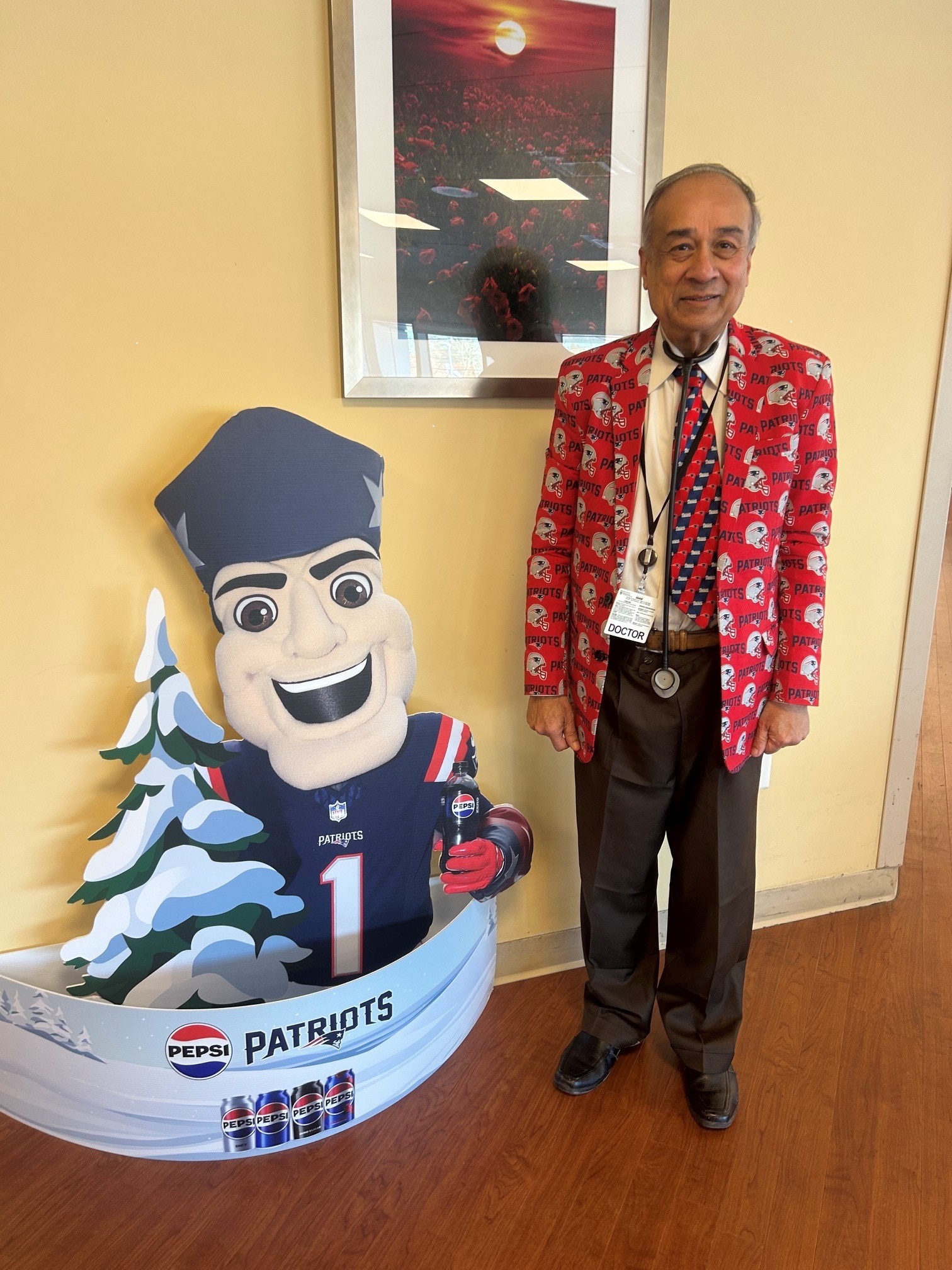
Sports is another passion for Prakash Rau, MD. An avid New England Patriots fan, Dr. Rau has been to several Super Bowls - including this year's match up between the Patriots and Seattle Seahawks. Rau has also been to three Olympics and attended this summer's World Cup match between France and Norway at "Boston Stadium" in Foxborough.
“I’ve worked at five hospitals during my career and this is the best,” said Rau, noting how South Shore Hospital has grown and advanced since he arrived.
“We can do so many more procedures, surgeries and treatments here today,” said Rau, who still sees patients in the hospital Thursday and Friday mornings before heading to his Braintree practice where he continues to work Monday through Friday.
“It’s a nice mix each week, coming to the hospital and seeing everyone,” Rau said.
While he has no immediate plans to retire as long as he is healthy and able to work, Rau knows that when he does, he’ll be leaving the GI field in good hands through a new generation of gastroenterologists he and Poornima have raised.
“Poornima and I are proud of our sons and I think both of our grandfathers would be proud as well.”