Gynecologic Cancer Awareness Month: Understanding Endometrial Cancer
Author

Katelyn McGovern Dorney, MD

September is Gynecologic Cancer Awareness Month, a time to raise awareness about cancers of the female reproductive system, and emphasize the importance of routine screening and early detection.
Gynecologic cancer is an umbrella term for cancers of the cervix, ovaries, vagina, vulva and uterus.
Endometrial cancer, which forms in the inner lining of the uterus, is the most common gynecologic cancer. It is also the fourth most common cancer for women in the U.S., according to the American Cancer Society (ACS).
ACS estimates that about 69,120 new cases of uterine cancer (endometrial cancer and uterine sarcomas) will be diagnosed this year, and 13,860 women will die from the disease.
Affecting mostly post-menopausal women, endometrial cancer is less common in women under age 45.
Since the mid-2000s, endometrial cancer cases have been on the rise, with uterine cancer deaths increasing by 1.5% annually from 2013 to 2022.
To learn more about endometrial cancer, we asked gynecologic oncologist Katelyn Dorney, MD, about risk factors, symptoms, and treatments and why early detection leads to better outcomes for women.
When it comes to endometrial cancer prevention, how important are routine exams?
Routine physical exams are always very important. The main symptom of endometrial cancer is postmenopausal bleeding or abnormal uterine bleeding. This requires evaluation and a work up by your provider.
Are there screening tests or procedures that can detect endometrial cancer early?
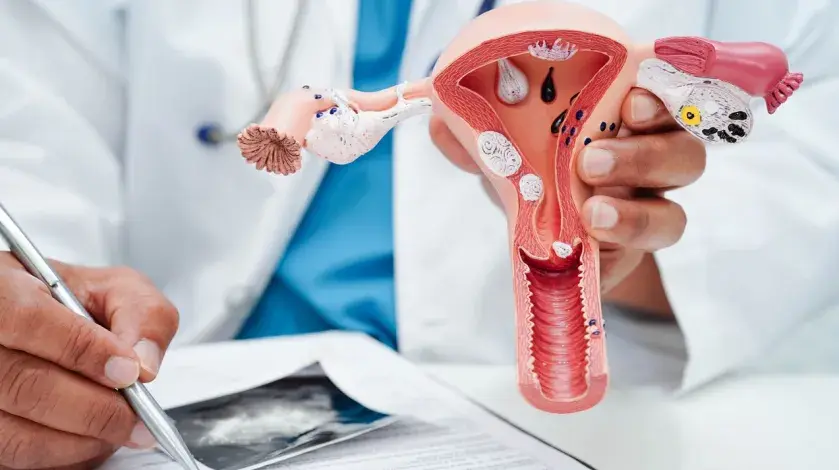
If a patient has abnormal uterine bleeding or postmenopausal bleeding, the first steps are a physical exam, a pelvic ultrasound, and oftentimes, an endometrial biopsy. An endometrial biopsy can be used to rule out an endometrial cancer or precancer, known as endometrial intraepithelial neoplasia (EIN).
Due to anatomy or discomfort, some patients may require a dilation and curettage (D&C) – a procedure that removes tissue from inside the uterus – rather than an office biopsy.
Patients with an inherited condition called Lynch Syndrome may be eligible for a screening endometrial biopsy, which is done in the absence of abnormal symptoms.
What are some of the risk factors for endometrial cancer? Are there lifestyle or diet changes that can lower someone’s risk?
Obesity is a major risk factor for low-grade endometrial cancer.
For each 5 kg/m2 increase in BMI, there is a 50% higher risk of developing endometrial cancer. Having more fat tissue can increase estrogen levels, which can increase the risk of endometrial cancer, especially after menopause. Reaching and maintaining a healthy weight can help reduce the risk of the most common type of endometrial cancer.
It is important to know that not all endometrial cancers are associated with obesity – particularly high-grade cancers and genetically related cancers.
There are some family cancer syndromes, including BRCA and Lynch Syndrome that put patients at risk of certain gynecologic cancers. Knowing your family history of cancers can be helpful. Screening biopsies, and in some cases prophylactic surgeries are recommended in these populations, to decrease the risk of developing endometrial or ovarian cancer.

What are some of the symptoms of endometrial cancer that someone should be concerned about and discuss with their provider?
The hallmark symptom of endometrial cancer is post-menopausal vaginal bleeding. Anyone with vaginal bleeding after menopause should tell their provider and have a medical workup.
Pre-menopausal women with abnormal bleeding patterns should also be examined to ensure there is no cervical or endometrial abnormality. Some women may find it difficult to determine where the bleeding is coming from – the urine, the vulva, the vagina, or the anus.
What kind of treatment options are available for someone diagnosed with endometrial cancer?
The treatment of endometrial cancer varies significantly based on the stage (where the cancer has spread) and the grade of the cancer (what type of cells).
Some patients may only require a staging surgery to treat endometrial cancer. Some endometrial cancers will require vaginal radiation, pelvic radiation, and/or chemotherapy after surgery.
Katelyn McGovern Dorney, MD is a gynecologic oncologist at the Dana-Farber Brigham Cancer Center at South Shore Health. Learn more about Gynecologic Oncology Care at the Cancer Center.
Author
Katelyn McGovern Dorney, MD