Cardiac Rehab Patient Shares Lessons Close to His Heart
Author

South Shore Health
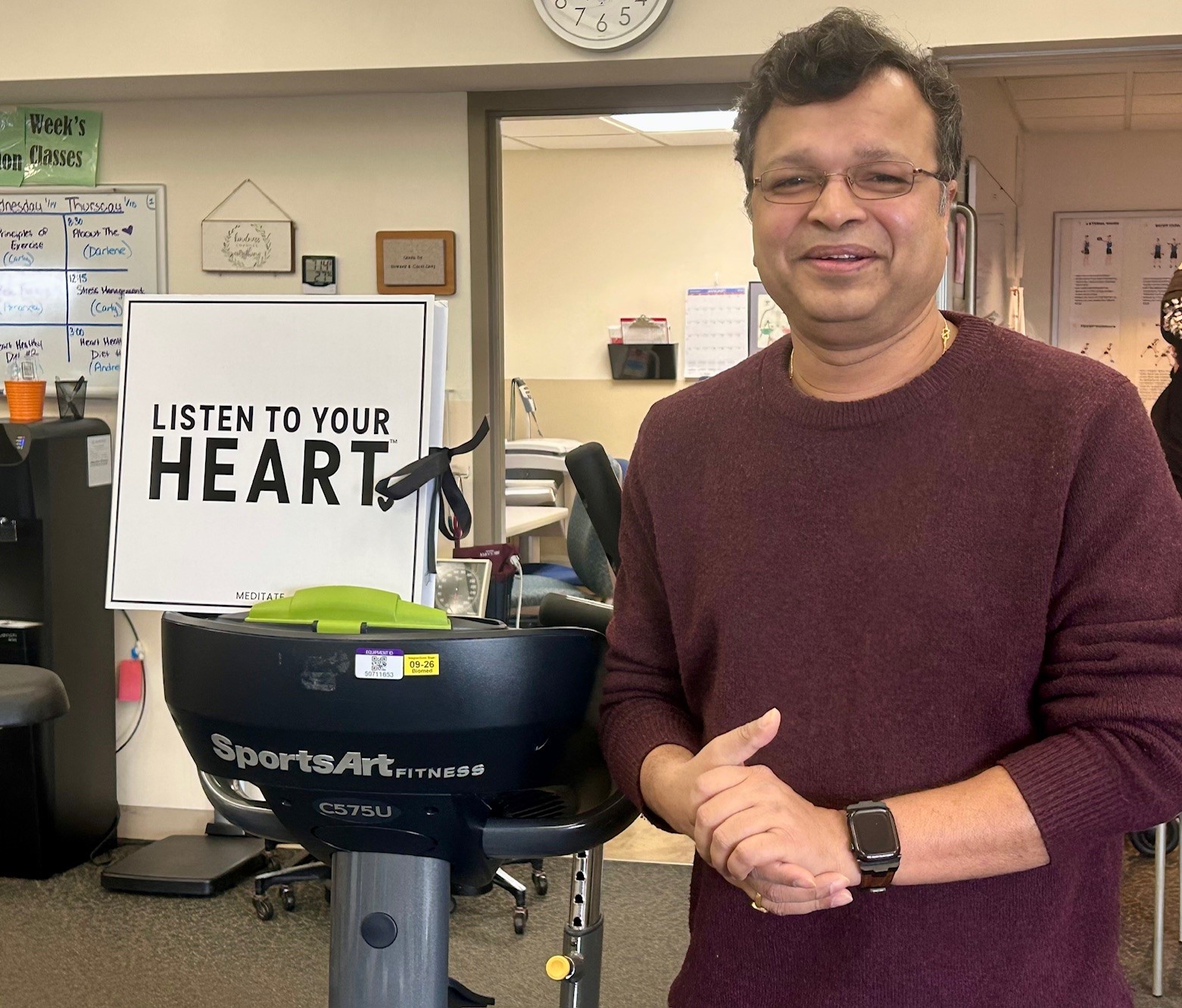
Sanjay Padhi thought the pain in his left shoulder was from the way he slept on it.
He mentioned it in passing during an appointment with his endocrinologist, Kristin Helm, MD, who ordered a stress test to rule out any cardiac issues.
Sanjay wasn’t worried.
The 53-year-old North Weymouth resident was in good health. He biked 10 miles per day, ate a healthy diet low in sugar to manage his diabetes, and kept an eye on his salt intake and cholesterol level.
So when his stress test EKG results indicated he had myocardial ischemia – a condition in which the heart is not getting enough blood – Sanjay was surprised to say the least.
“How could this be happening to me?” he said. “I thought I was doing everything right.”
Cardiologist Susan Feinstein, MD urged Sanjay to cancel his afternoon work meetings and lunch with his wife, Carolyn, and go directly to South Shore Hospital’s Emergency Department for further testing.
Cardiac catheterization revealed the cause of the ischemia: a 90% blockage of the second obtuse marginal (OM2) artery that carries oxygenated blood to the left heart’s left ventricle.
The blockage could have caused a heart attack that Sanjay wouldn’t have seen coming.
A lifesaving, life-changing stress test
“That stress test saved my life,” said Sanjay, who believes everyone over age 50 should have the test as a preventative measure and baseline for cardiac function.
“That was the first indication for me that I had a blockage,” he said.
Like a colonoscopy or screening mammogram, a stress test can catch abnormalities before they become a more serious problem, he said.
According to the American Heart Association, every year in the U.S., about 805,000 people have a heart attack and the vast majority – 605,000 – are first-time cardiac events that strike without warning.
Even more alarming, Sanjay said, is that one in five heart attacks are “silent,” occurring without any obvious symptoms.
“People walk around with blocked arteries, feeling fine, until they’re not.”
Which is why early detection and intervention is so important.
For Sanjay, intervention was the placement of a coronary artery stent to restore blood flow to his heart and reduce his risk of a heart attack.
David Denmark, MD also recommended Cardiac Rehabilitation for Sanjay, who said attending the 12-week program was “the best decision I made.”
Lessons learned by listening to your heart
Cardiac rehab was a learning experience for Sanjay.
“The biggest lesson I learned is the heart is a muscle – the most important muscle we have. Like any muscle, the heart responds to training and weakens if you neglect it.”
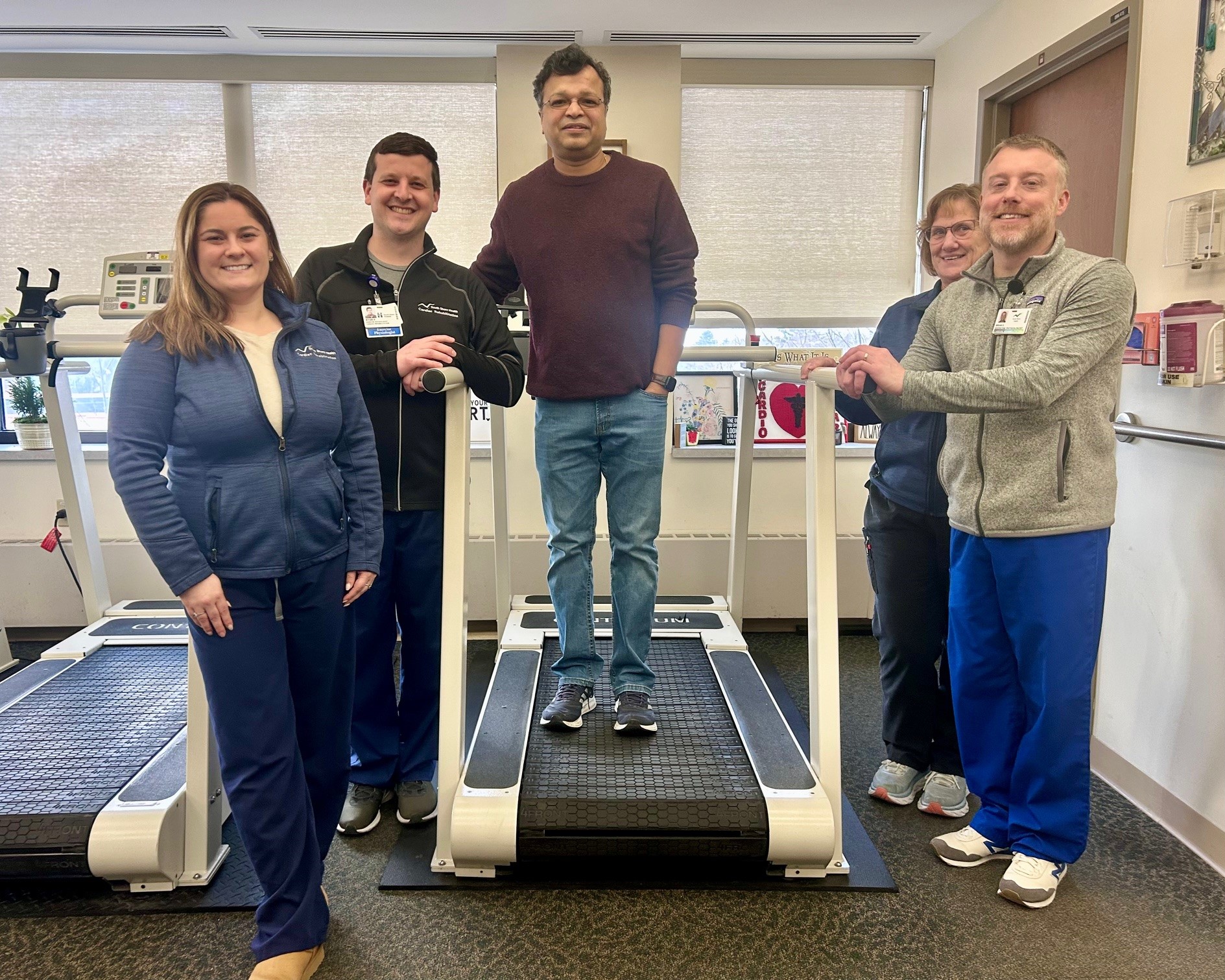
Sanjay credits his cardiac rehab team with teaching him how to strengthen his heart in a safe and supportive environment.
All cardiac rehab patients participate in structured exercise sessions, customized for individual needs and updated at frequent intervals throughout the program. Heart rate, rhythm, and blood pressure are monitored before, during, and after exercise.
Sanjay said being monitored while exercising was reassuring and helped him gain the confidence to push harder and increase the duration and intensity of his sessions.
More than just an exercise program, cardiac rehab provides a holistic approach to healing, he said.
“They teach you the important roles a healthy diet and managing stress play in your cardiovascular and overall health.”
As chief technology officer for a biotech company, Sanjay said stress often comes with the job.
Through cardiac rehab, Sanjay has learned techniques to help him “de-stress” when he sees his heart rate going up on his Apple watch.
“There are breathing exercises that help me calm down, or I just take a break and go for a walk,” he said.
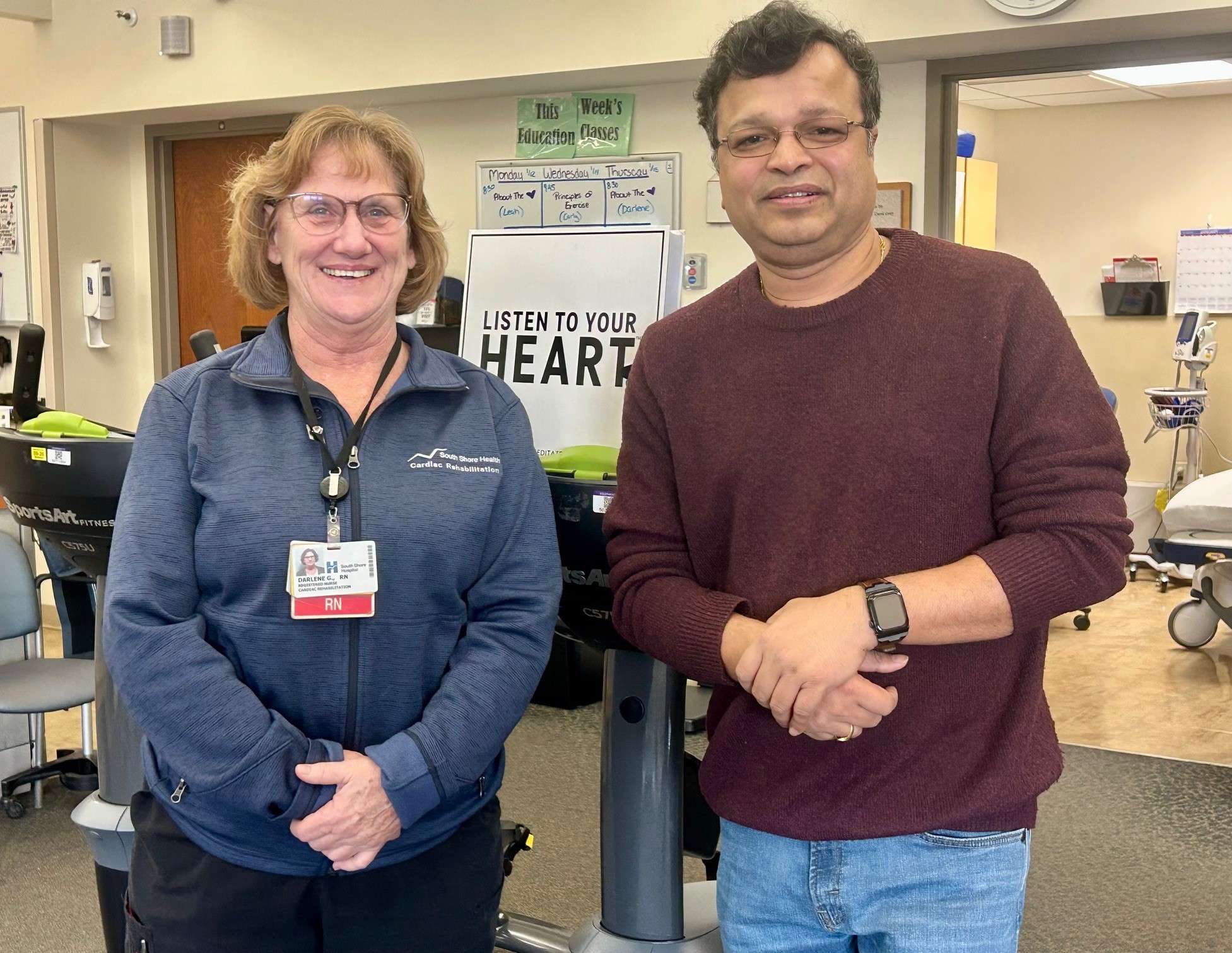
Seven months after the stress test that changed everything, Sanjay said he’s feeling good and more in control of his health than ever before.
Sanjay and Carolyn are grateful for the excellent care he received from doctors, nurses and technicians at South Shore Hospital and the support, encouragement and lessons learned from the cardiac rehab team.
“They don’t just rebuild your body; they rebuild your relationship with your own heart.”
Learn more about Cardiac Rehabilitation and heart and vascular care at South Shore Health.
Author
South Shore Health