Anal and Colorectal Cancer Care

Contact the Multispecialty Clinic

To schedule an appointment, please call 781-624-4760.

Two men smile as the high five while cycling down a coastal trail with the sun peeking out in the background

When you receive an anal or colorectal cancer diagnosis, it can be difficult to know where to turn. 

At the Dana-Farber Brigham Cancer Center at South Shore Health, you have a team of experts ready to provide expert, personalized care – right in your community.

Anal and Colorectal Cancer Experts on the South Shore

Taking on anal or colorectal cancer requires a team approach. 

Our multidisciplinary Weymouth team features surgeons, gastroenterologists, medical oncologists, and radiation oncologists who collaborate to review your diagnosis and create a care plan unique to you and your goals.

Leading Anal and Colorectal Surgery Expertise, Close to Home

Our anal and colorectal cancer surgery team features board-certified experts who specialize in minimally invasive robotic surgery.

Surgeons have access to best-in-class robotic equipment with the da Vinci system, offering precise results and a shorter recovery time.

To schedule an appointment, please call 781-624-4760.

Anal and Colorectal Cancers We Treat

  • Anal cancer
  • Colon cancer
  • Rectal cancer

Anal and Colorectal Cancer Treatments We Offer

  • Local excision and polypectomy
  • Robotic-assisted colorectal surgery
  • Resection of the colon
  • Radiation therapy
  • Chemotherapy
  • Immunotherapy
  • Tumor ablation (radiofrequency and laser)
  • Cryotherapy
Two older women smile as they talk while walking down the street in an outdoor retirement community setting.

Six Things to Know about Colorectal Cancer
Dr. Saund discusses colorectal cancer screenings, risk factors, symptoms, and treatments in the South Shore Health Blog.
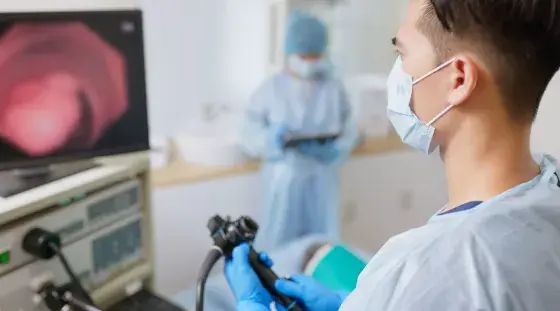
A provider watching a monitor during a colonoscopy

Preparing for a Colonoscopy: What to Know

Colonoscopy is the primary screening tool for colorectal cancer. Get insight on what’s involved in a colonoscopy, how to prepare, and more.

Anal and Colorectal Cancer Care Locations
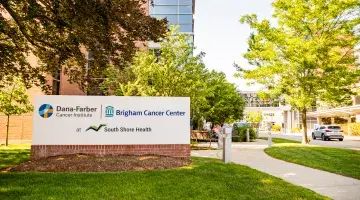
cancer center

Dana-Farber Brigham Cancer Center at South Shore Health
Consultations, Chemotherapy, Imaging

Dana-Farber Brigham Cancer Center at South Shore Health

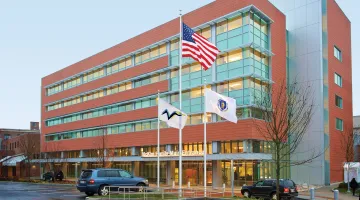
An exterior photo of the main entrance of South Shore Hospital.

South Shore Hospital

Surgery, Imaging

South Shore Hospital

Frequently Asked Questions about Colorectal Cancer

Click each section below to learn more about colorectal cancer, including symptoms, risk factors, and treatments.

Colorectal cancer refers to cancers that develop in the colon or rectum.

These include colon cancer, which starts in the colon (large intestine), and rectal cancer, which starts in the rectum.

Colorectal cancer is the third-most diagnosed form of cancer in the United States, with more than 150,000 new cases annually.

Colorectal cancer is the second-leading cause of cancer death for men and women combined in the United States.

Colorectal cancer risk factors include age (over 50), being overweight, family history, alcohol consumption, tobacco use, and a diet that is high fat or high in red or processed meats.

Other health conditions, like Crohn’s disease and ulcerative colitis, can also increase your risk of colorectal cancer.

Symptoms of colorectal cancer often differ from patient to patient. In some cases, patients may not notice early colorectal cancer symptoms.

Colon cancer symptoms can include blood in stool, swelling or pain in the abdomen, a change in bowel habits, explained bloating or weight loss, and unexplained fatigue. 

Rectal cancer symptoms include blood in stool, feeling like your aren’t done going after a bowel movement, unexplained fatigue or weight loss, more frequent bowel movements, and rectal or anal pain.

It’s important to note that other medical conditions can also cause the symptoms above.

If you experience any of these symptoms, speak to your primary care provider.

Colonoscopy is the most common screening test used in the United States.

It allows examination of the colon for polyps, and removal of polyps for analysis. 

Alternative non-invasive options for low-risk individuals that do not require bowel preparation include the FIT Test (every year), or FIT-DNA Test Cologuard (every 3 years). 

Testing with Cologuard requires mailing a stool sample collected at home. 

If a FIT or FIT-DNA test results are positive, a colonoscopy is recommended.

Treatment options will vary depending on the type and stage of colorectal cancer. The most common treatment methods include:

  • Colorectal surgery, including minimally invasive and robotic-assisted surgery, is the primary type of treatment for most colorectal cancers. Surgeries are different for each patient, but most colorectal cancer surgeries will involve the removal of the cancer, some healthy tissue around the cancer, and any nearby lymph nodes.
  • Radiation therapy, which uses radiation beams to shrink or kill tumors, can also treat colorectal cancer. Radiation therapy types can include external radiation, intraoperative radiation therapy, and proton beam radiation.
  • Chemotherapy helps kill cancer cells. Colorectal cancer treatment with chemotherapy can occur both before and after surgery.

Additional Resources for Patients

We know that an anal or colorectal cancer diagnosis comes with a variety of questions.

Below, you can find additional information on our services and ways we support you through your treatment. Click to expand each section.

At your first appointment, you’ll meet with your surgeon to discuss your cancer diagnosis and review your medical history. 

This meeting will give you a chance to get to know your surgeon and ask any questions you may have.

After your initial visit, our multidisciplinary team will review your case and create a unique care plan designed to provide targeted, personalized treatment.

If necessary, any procedures or follow-up appointments will be scheduled promptly.

All anal and colorectal cancer care services are conveniently located in Weymouth, just minutes off Route 3 North & South.

All sites feature ample free parking, with free valet parking available on weekdays at South Shore Hospital and the Dana-Farber Brigham Cancer Center at South Shore Health at 101 Columbian Street in Weymouth.

If you’ve been diagnosed with anal or colorectal cancer and would like a second opinion, our team is happy to review your case. 

Please call 781-624-4760 to speak to our scheduling team and schedule an appointment.

Upon scheduling your appointment, our team will assist with the sharing of any required medical records, including biopsy results, imaging results, and visit summaries.